

Eternal Flames
Rabbi Shimon Bar Yochai was not a mysticist

W.G.H
In my childhood, one of my favorite holidays was Lag Ba’Omer. Mostly due to the tradition of lighting bonfires, and playing with bows and arrows, in memory of Bar Kochva’s revolt against the Roman (which ultimately failed). It was just a fun evening with friends, and hot potatoes. Though I don’t light a bonfire these days, I still commemorate this event, albeit for much deeper reasons.

The Zohar, the book at the center of Kabbalah studies, is attributed to Rabbi Shimon Bar Yochai, whose passing we commemorated this week. I try to include Kabbalah studies in my routine throughout the year, but I dedicate this day completely to this subject. Many people who are asked to describe the Zohar or Kabbalah, talk about Jewish mysticism. Many people relate it to those red ribbons worn by celebrities like Madonna or Ashton Kutcher, and others go as far as blaming every ill in the world on Kabbalah.

All of those people are mistaken, all due to complete ignorance (they simply never learned anything about the Zohar).
Let’s start with what Kabbala is not.
Kabbalah is not magic, not the study of magic and not the practice of witchcraft. There are no spells, no curses and no hocus pocus. Kabbalah is not an ideology. It’s not Buddhism or a philosophy. It’s not a problem-solving self-help book, at least not in the way you might know these books to be. And it’s most definitely not mysticism.
The main differences between mysticism and Kabbalah are that:
One - while mysticism deals with things “beyond our understanding” that we just need to “accept”, Kabbalah teaches us that even though there are things “beyond our capacity to understand”, we can still find ways to understand our purpose.
And Two – Kabbalah is linked to morality, God, truth. mysticism doesn’t care about it.
So what IS Kabbalah?
In the simplest of terms, Kabbalah is learning how to receive (not just the technical “how”, but the purpose of receiving) God’s intended blessing to us. It comes to teach us about reality, beyond what we perceive with our 5 senses, to better understand what we’re supposed to do with our lives.
This links to the second difference between mysticism and Kabbalah. Kabbalah teaches us that the world, our reality, our existence has a direction. A purpose. We are not randomly born and then die on a piece of random rock that hurtles through space.
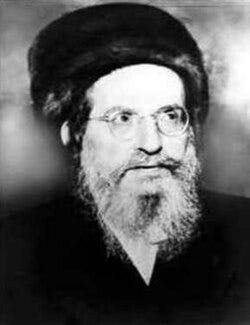
In that sense, Kabbalah is as rational and practical as can be. Because one can only operate effectively and efficiently in an environment he understands. The study of the Zohar is about learning to understand how the world works, beyond the observable materialistic perception. It is true that many of the aspects of the – let’s call it for now – higher reality are things we don’t have words for, but that is the magic of The Zohar and the people who brought it to us, especially Rabbi Ashlag, who wrote the most accepted interpretation of the Zohar. He was able to make the extremely complex concepts accessible to pretty much anyone.
I like the way Dr. Jordan Peterson views the power of stories. You might think about it in these terms: stories that persist have some inherent value. By understanding biblical stories, for example – and as exemplified by Dr. Peterson in many lessons – one can derive actual good in a very real way. The reason is that stories that persist also have direction, or if you will, moral weight.
Understanding these concepts does not provide you any kind of super power, or special abilities. All it does is give you a choice. It is also not idealistic. Understanding the way the world works is linked to action.
This brings me back to those red strings you might see on some people’s hands. Or other tokens and other kinds of “lucky charms”. That is not actually what those things are. The purpose of those “tokens” is not to deliver some magic. It’s a symbol for the person to wake up and get energized about his faith. Through this reminder, he is encouraged to take action that is beneficial, due to its alignment with the way the world actually works.
We know, from science lessons that gravity pulls us toward the ground. We know why it is so, and we can calculate the gravitational force. We also know that there are practical applications to that knowledge. For example, we avoid stepping off a roof.

The same applies to Kabbalah.
You don’t get to invoke some incantation and change reality. You can change reality, but you have to do it:
a. By action
b. By direction
Kabbalah does NOT negate the Torah. The Torah was given to us, so we know how to live in the world, if our goal is to resemble our creator as best as we can. That is the direction. Kabbalah teaches us – among so many other things – that acting in the opposite direction will simply take you further from God and will be to your detriment.
This is the choice, and if one wants to make good ones, one can learn from the Zohar.
Having said all of that, it’s critical to understand that all of those teachings are aimed inward. The world, the reality we speak of — these are terms that point inward, to the individual. For example, when we speak about the Pharaoh in Passover, we recall some ancient king, but the Pharaoh we fight against every day is an internal force inside us, and not a man. Or when we talk about Amalek, we must exterminate it, because it is a negative, doubtful, heretical force inside us. Changing the world, altering reality, transcending is what we do inside. It’s not about a revolution or rioting in the streets. It’s about leading an internal revolution in our own mind, where the forces that align with God’s characteristics fight to win over Satan and his minions (who are also inside us).
Now, not only is Kabbalah vastly misunderstood. It is also blatantly used by some truly devious people for nefarious reasons and ends.
We talked about the false Messiah, Shabtai Tzvi, who brought so much harm to Jews around the world, and continues to serve as fuel for antisemites to this day. But there is never a shortage of charlatans who use it for a quick buck, or more sinister goals.
How do you avoid these folks?
1. Choose your teacher very carefully. I learn from a Rabbi who learned from Rabbi Ashlag’s son. I’ve also listened to many of his lessons with skepticism and discernment before I really committed.
2. Is the teacher religious? If not, with all due respect, how can he teach something that literally requires one to follow the tenets of the Torah?
3. Does the teacher contradict Halakha? Is he saying that you are excused from following biblical commandments? Stay away from that man, whether he has a Kippa or not.
4. Does the study revolve around money, payments? Is it very expensive? Look for someone else.
5. Is he claiming exclusivity? Telling you “no one else knows what they’re talking about”? well, try one of those nobodies. Hear what they have to say and apply all other criteria.
Rabbi Shimon Bar Yochai left a treasure for us, and we’d be stupid and reckless to ignore it. In fact, knowledge of Kabbalah – something that takes a lifetime – seems to me like a prerequisite for achieving the purpose for which we were created. We need to understand reality, learn the rules of its nature, and based on that understanding, move forward and grow. That is what brought me back to God, after my long hiatus, and this is what strengthens my faith every day, even in the worst of them.
So keep those flames burning, in memory of Rabbi Shimon Bar Yochai, and the blessings he brought to all future generations.
Thanks for the explanation of the holiday. I am glad to confirm what I always knew: no animals were thrown into any bonfires. 🤦🏻♀️
Kabala sounds interesting and thanks for making me curious to know more. Just a question: what type of mysticism are you comparing and contrasting? Because I think Saint John of the Cross (a 16th century Spanish mystic imprisoned by the Church) cared a lot about truth. He wrote a famous work called _The Dark Night of the Soul_.